The Stairs, Chapter 11
Indignity Vol. 6, No. 7

THE STAIRS
© Tom Scocca, 2025
This is a work of fiction. Any resemblance to actual people, places, and events is entirely coincidental, with the exception of the events in Chapters One and Two, which happened more or less as written, on the line between Cambridge and Somerville, Massachusetts, on Memorial Day weekend in 1999.
11.
"But we already came here on the subway," Theo complained. We were following Maxine down a stairwell, considerably less ornate than the rest of Shinter's, to which she'd led us via escalator to the eighth floor and a zigzagging trip through LIVING ROOM FURNITURE and DRAPERIES.
Maxine glanced back at him without slowing down. "We came on the Eagle Avenue line," she said. "That model train went to the other side of the store."
"The atlas doesn't have any subway stop on the other side of the store," I said. We hurried past a faded blue 6 painted on the wall of a landing, next to a door, and kept going down. "The Granite Avenue line is another whole crosstown block away."
"It wasn't a subway stop," Maxine said. "It was an elevated train stop." We passed a painted 5, went down and around again, passed a 4, and went down again to reach 3.
"There," she said, stopping at the door on the landing. "Now—"
"We walk out that door and we're in 1940 again?" I said.
"We walk out this door and we're in—" She pushed the door open and stuck her head out. "Looks like STATIONERY." We followed her out into the sales floor. We were off in a corner, away from the bustle of the escalators. Fountain pens gleamed in glass cases. It was quiet there.
"This doesn't really look any different," Theo said.
"It's not any different," Maxine said. "We're still where or when we were when we started. You don't think every set of stairs is going to transit spacetime for us all of a sudden, do you? We went this way to avoid prying eyes, that's all. Now: think."
"Think of what?" Theo said. He was getting grouchy.
"Think of where we would go from here to catch the train," Maxine said.
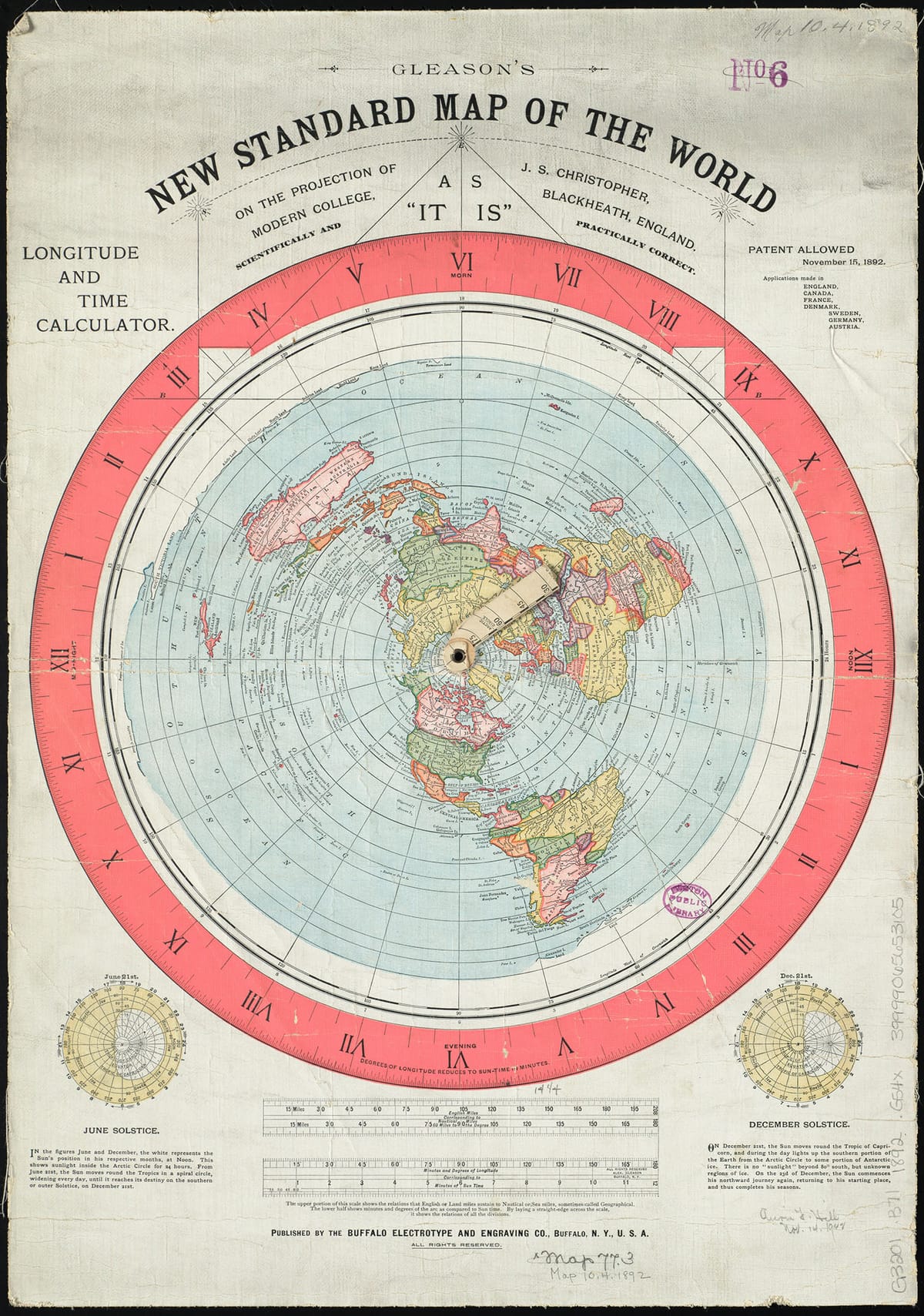
We studied the stationery department. Pens, notebooks, boxes of paper in a dozen shades of not exactly white. A huge map of the world, one of those pull-down windowshade ones you see in classrooms, hanging nearly to the floor. Filing cabinets, sturdy metal ones and polished wood ones.
Bookcases, some full of books and some empty, stood against the walls. "In a mystery movie, one of those bookcases would swing around and become a door," Theo said. I went over and pushed against a bookcase. It didn't move.
"These things are huge," I said. "I feel sorry for whoever has to drag them all the way back here."
Maxine paused and cocked her head. "What if they don't?" She nodded to herself. "I'm sure they don't. Look. All the really heavy furniture is right around this spot, near the wall. There must be a freight elevator."
There was a rustling sound from the map of the world. It was swaying away from the wall a bit, and I could see Theo's sneakers sticking out below Antarctica. "There's a door back here," his voice said, muffled.
"Of course!" Maxine said. "That's it!"
The map swayed a little more. "What do you mean, 'Of course'?" Theo grumbled. "I was the one who thought to look."
"Never mind," Maxine said, turning sideways to slip behind the map. "Let's go." I heard the creak of a door and ducked in after them.
The door opened directly into a wide back hallway, painted in chipped layers of gray, running parallel to the doorway we'd come through. To the right, the hall was clear and well lit, stretching off into the distance. A few yards that way, on the wall opposite from us, was a huge set of elevator doors.
To the left, the hallway was lined with junk: dusty bookcases with shelves missing, dented file cabinets, a crooked floor lamp with no shade, a hand truck with one tire flat and coming off its wheel. A rolled-up floor mat was leaning against the wall. Behind the mat, one patch of wall was inset with black and white tiles.
I grabbed the roll of mat, which felt stiff and floppy at the same time, and shoved it till it tipped off to the side, so we could see the tilework. It was a cracked and grimy mosaic sign: FISHHAWK AVE RLWY., with an arrow pointing further down the hall.
We picked our way through the clutter till we reached the end of the hall. A set of double doors stood there. I could feel cold air trickling under them. Maxine dug out the sweatshirts and we all put them on.
"Ready?" I said.
"Let's catch a train," Maxine said. I pushed the doors open, and we stepped through onto the 75th Street railway platform.
Find other chapters of The Stairs here.

EASY LISTENING DEP'T.
Here is the Indignity Morning Podcast archive!
 TOM SCOCCA

SANDWICH RECIPES DEP'T.
WE PRESENT INSTRUCTIONS for the assembly of sandwiches selected from Cassell's New Dictionary of Cookery, published in 1912 by Cassell and Company, London, New York, Toronto, and Melbourne, and available at archive.org for the delectation of all.
VICTORIA SANDWICHES, SAVOURY (for breakfast, luncheon, etc.).
Wash six or eight anchovies, cut off their heads and fins, take out the backbones, and divide each fish in two, from the shoulder to the tail. Cut an equal number of thin slices of brown bread and butter; put between each two slices alternate layers of hard-boiled eggs, mustard and cress cut small, and the fillets of the anchovies ; press the slices closely together, and with a sharp knife cut them into neat squares. Place them on a dish covered with a napkin, and garnish with parsley. If not wanted immediately, cover them with a napkin wrung out of cold water to keep them moist.
VICTORIA SANDWICHES, SWEET.
Beat half a pound of fresh butter to cream. Work in with it half a pound of powdered white sugar, half a pound of dried flour, and a pinch of salt. Add these ingredients gradually, and beat the mixture well between every addition. Whisk four large fresh eggs, stir them into the cake, and beat again for some minutes. Butter a shallow baking-tin, pour the batter into it, and bake in a well-heated oven. Let it get cold; spread a little good jam upon one half, place the other half upon it, press the pieces together, and sift powdered white sugar on the top. Cut the cake into long fingers with a sharp knife, pile these crosswise on a glass dish, and they will be ready for serving. Time to bake the cake, twenty minutes. Probable cost. 1s. 6d.
If you are inspired to prepare a sandwich inspired by these offerings, be sure to send your thoughts and a picture to indignity@indignity.net .

SELF-SERVING SELF-PROMOTION DEP'T.