The Stairs, Chapter 18
Indignity Vol. 6, No. 23

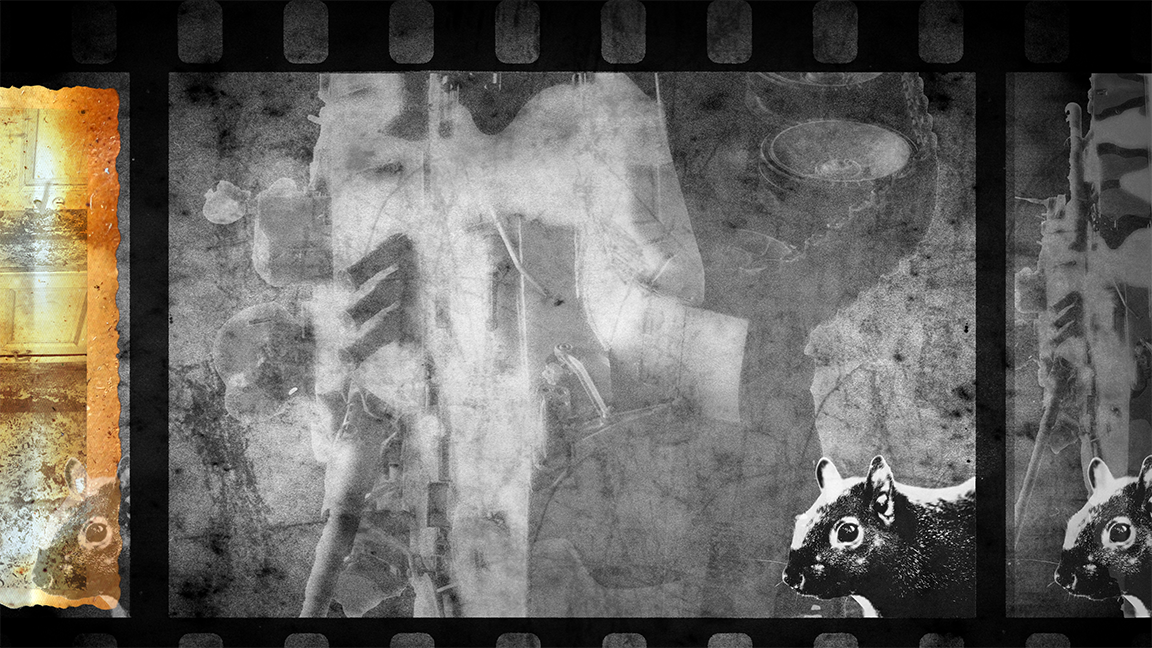
THE STAIRS
© Tom Scocca, 2025
This is a work of fiction. Any resemblance to actual people, places, and events is entirely coincidental, with the exception of the events in Chapters One and Two, which happened more or less as written, on the line between Cambridge and Somerville, Massachusetts, on Memorial Day weekend in 1999.
18.
"My Dear Young Friends," the letter began. "I hope this letter finds you." We were reading it up in our bedroom, sitting on the bare floor. The handwriting was angular and precise and looked unfaded. If not for the creases pressed deeply into it, the paper could have been new.
It continued:
"Opal and Pythia told me about your visit to the Institute. From them, I gather, you learned about the existence of the temporal resonator. Judging by the fact that you found it possible to go to visit them at all, I gather too that the resonances may be growing stronger—that our two time frames are becoming more closely entangled.
"I am afraid that the job of disentangling them is beyond what I or anyone else can accomplish here, or rather, now. If that separation is to be done, it needs to be done by someone who can reach both times, as you have been able to.
"This is dangerous work. To do it, you will need to find—in your time, or ours, or somewhere in between—a man named Warren Hartstock.
"Hartstock is my colleague, or former colleague, from the Institute. I was brought on to help with the project because I study applied philosophy, Warren because he studies theoretical physics.
"Working together, along with Opal and our surprising squirrel associates, we set out to resolve the problem that the War Department had set out for us: the problem of deliberately matching two separate time frames to become one.
"As we continued, and as the project took shape, Warren's efforts and mine led us each to related but incompatible conclusions: Warren reported to the War Department that, in his judgment, it was possible to do what the department wanted done; I reported that, in my judgment, it should not be done.
"The War Department found Hartstock's conclusions more appealing than mine, and the project has carried on, with Warren in charge of making it work. I kept trying to convince Warren to put it aside, but he would not. He has stopped speaking with the rest of us, save for a few of the squirrels, who find the work and the acorns agreeable. We have not seen him in two months—long enough, I must conclude, for him to have made substantial progress on the resonator.
"I had hoped you would not have to deal with Hartstock, but I see no other way. Warren is not evil. It would have been easy to stop him if he were evil. He is simply wrong. Brilliant, deeply engaged in a challenge, and wrong.
"Hartstock's last known address, here in our time, was:
"615 Willis Boulevard, Apartment No. 2
"Old Marble
"Best of luck. Telephone if you can.
"Norman Melk"
"Where is 615 Willis Boulevard?" Maxine said, getting out her phone to look at the map. "It must be right near here."
I thought about studying our neighborhood in the street atlas, and a prickly feeling spread over the backs of my hands. "There is no 615," I said. "The 600 block begins right where Carter meets Willis. The first address number on the block is on the laundromat next to our building. That's 621."
"You mean, there isn't any 615 now," Maxine said, slowly. "There used to be one." The prickly feeling went all the way up to my elbows.
"Where?" Theo said. "We went out there, and there weren't any other different buildings on the block."
"That's because we were already in the building to begin with," I said. "When we come in the front door like usual, to go up the front stairs, it's 710 Carter Street. When we go out the back door, and down those stairs, it's 615 Willis."

WEATHER REVIEWS

New York City, March 8, 2026
★★★★ At 6 a.m., which would have been 5 a.m., the streets were damp and foggy as London. The taxi and the streetlights glowed, everything diffuse except the one overpowered LED security light shooting a hard sharp line through the shutters and across the ceiling. A few hours of recovery sleep later, the sidewalks were still dampened but the daylight was almost glimmering through a mottled gray sky. The lightweight low-cut socks were buried under jeans and chamois shirts. Midday was, to a body acclimated to winter, definitely warm and sticky. The glow on the stone and brick faded away, but the day remained t-shirt weather. The chattering of an apartment full of people carried out over the sidewalk from an open window. A boy worked a fishing rod on the shore of the Pool, even as the gray and puddly remains of the ice sheet still covered dozens of yards of the surface. The ducks, after months of huddling up in small openings in the ice, had dispersed themselves all along the newly opened waters. On the Great Hill's thawed and cleared cinder track, the humans were likewise spread out strolling and jogging and walking dogs, keeping their own pace. The newly positioned last hour of daylight filled up with a golden-peach glow.

New York City, March 9, 2026
★★★★★ The sky was such a fine strong blue it seemed impossible that it had been so stubbornly otherwise for so many days before. A beam rebounding off a window across the avenue stretched through the living room, past the kitchen, and all the way down the hall to throw reflections of the doorknob of the back bedroom. Lengthening twigs and fattening buds were silvery. The breeze had a friendly chill to it and the sun was warm on the back of the neck. The voices of small children and the smell of weed came floating in the windows at more or less the same time. The sun caught in each little perforation of the street-cleaning parking sign's U-channel post and flared off the handlebars of a bicycle locked to it. The rock face along the edge of the Park was swept with light, broken up by the bent and branching form of a tree in the shade, by the shadows of other branches, and by the shadows of the stone's own tilted shelves and fissures. Turtles basked on the rocks sticking out of the Pool; a weekend day's density of people had spread out on the sparse lawns. The water beside the still-surviving remains of the ice had an algae-green tinge already, and above the exit falls a mat of precocious scum floated, with twigs and stray feathers caught in it. The relentless rush of light reduced the bare trees in the woods to a see-through scrim, behind which the usually concealed bulk of the Great Hill rose as a visible presence, with little people making their way down the twin paths along its flank. The top of a plane tree clawed at the blue, its branches bone-white and densely speckled with the tiny russet dots of seed balls. In every direction, save directly toward the blinding sun, the eye found another deep line of sight, with a human figure distinguished by the light: a moving cyclist far downslope, a glowing nimbus of hair in a grove, a head with a pink ball cap and white wireless earbuds up by the edge of an outcropping. The light spread its grace over inanimate items too—a fire escape! A case of water bottles, on a two-wheeled shopping cart, glowing like a lamp. Sharp, sharp white striping on an apartment awning. Above the sunken basketball courts, so recently awash with slush, one ball after another rose to the top of its arc and hung, for a moment, weightless.

New York City, March 10, 2026
★★★★ The air on the usual streets was cool and smelled of the sea, as if it were the air outside the hotel the first morning in a foreign city. Two airplanes and a seagull went their different ways on wings drawn neatly against the blue. The door to the bakery was standing open to let the day in and there was no line to wait for the iced coffee. Young men had gone straight to trying shorts, and by midafternoon the direct sun was a little bit hot against a dark shirt and the faint low-down haze of morning had crept higher up the heavens. Teens were out of school and in no hurry to go anywhere; the line at the Mr. Softee truck outside H Mart was a dozen people. The light on the walk back down Broadway was overwhelming after all the weeks of clouds and long nights. Eye muscles unaccustomed to squinting ached a bit afterwards.
New York City, March 11, 2026
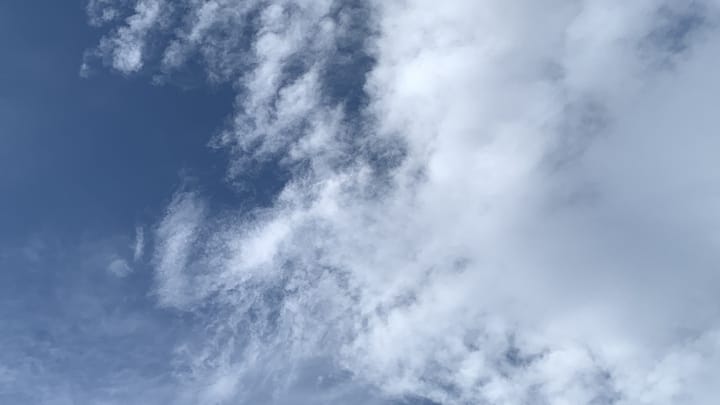
★★★ The breeze coming indoors had cooled off enough to switch from welcoming to falsely forbidding: even though a t-shirt had been warm enough for taking out the morning trash, it felt necessary to add a hoodie to get through an afternoon of desk work. The light lost its warm clarity, then got it back again. Then, in the span of a quick mile and a half on the subway, a layer of coalescing clouds looked like it might—and according to the weather app, would—bring a rain shower. But after another leg on the subway, all the way downtown, there was sun squeezing between the close-packed towers. After sundown, a strange and giddy wind filled the narrow streets, and back uptown a few individual drops fell. The real rain arrived in the night, with a blast of thunder, the drops rattling down in the still-warm night under clouds flickering with lightning.
New York City, March 12, 2026
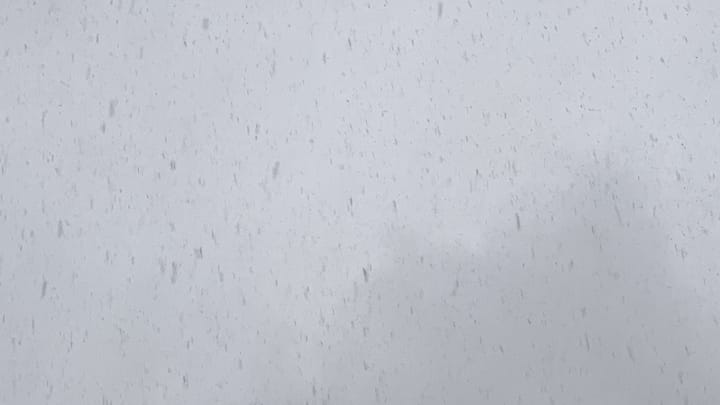
★ Day broke in reverse: for a moment, there was a gorgeous pink and amber glow around the rim of the sky, and brilliant red-gold light was descending from the heights of the towers—and then the luminous view out the windows disappeared, replaced with the apartment's reflected interior against a new black night. At breakfast the scream of a pavement saw starting came through the window, and the approach to the window to try to shut out some of the sound was met by a cold gust. Windshield wipers were working in the gloom. It was still over 50 degrees but the forecast said the ninth-grader would need to bring his parka for the return trip to school. By lunchtime, in fact, it was already time for an adult parka, and on the way home from lunch pellets of ice were slanting down and rattling off the parka. Ice crunched underfoot on the front steps. Now and then out the window what was falling would become snowflakes, and then it would go back to being something else. As evening approached, the snow returned as a dense curtain of fine flakes. Frigid drafts pushed in past the unprepared baseboard heater. Then at sunset a whole new flush of color emerged, gold going over to lilac, a fussy touch of symmetry on the otherwise disordered course of the day.

EASY LISTENING DEP'T.
Here is the Indignity Morning Podcast archive!
 TOM SCOCCA

SANDWICH RECIPES DEP'T.
WE PRESENT INSTRUCTIONS for the assembly of sandwiches selected from Child's Recipes for Cooking and Preparing, by Childs Company, published in 1913 and available at archive.org for the delectation of all.
OYSTER.
2 pieces of bread
2 oysters
Bread 2 large cull oysters and fry in grease 345 degrees. Place between 2 pieces of bread.
If you are inspired to prepare a sandwich inspired by these offerings, be sure to send your thoughts and a picture to indignity@indignity.net.

SELF-SERVING SELF-PROMOTION DEP'T.