The Stairs, Chapter 27
Indignity Vol. 6, No. 43

THE STAIRS
© Tom Scocca, 2025
This is a work of fiction. Any resemblance to actual people, places, and events is entirely coincidental, with the exception of the events in Chapters One and Two, which happened more or less as written, on the line between Cambridge and Somerville, Massachusetts, on Memorial Day weekend in 1999.
27.
Warren Hartstock made the smallest possible gesture toward a pair of wooden chairs. Maxine and I sat down, still holding our coats, and he stayed standing by the half-closed door. Outside the window, winter sunshine was coming through bare branches.
"My name is Rollo," I said. "This is Maxine."
"We came here from the future," Maxine said, "to ask you to shut off the resonator."
Warren Hartstock didn't say anything. On a shelf behind him was a compact steel-framed clock with hands pointing to 2:37. Still 13 hours ahead of our time of day. "It's making time get stuck," I said. "The days are repeating. My dad's supposed to be coming to Marble City but he never gets here. There."
"It's not working right," Maxine said.
Warren Hartstock looked down. He ran a pink thumb down the inside of his jacket lapel, then back up again. He looked at us again. "You must be frustrated," he said. "I have been frustrated too." He nodded a little, to himself rather than us. "The temporal resonator's work is incomplete," he said.
"It's completed too much!" Maxine said. "Everything is getting trapped in place!"
Warren Hartstock shook his head. "No," he said. "It is working. I knew it should work, in principle, but I was beginning to doubt the technical execution. When I heard about you, I knew things were finally going correctly." He smiled now, a toothy smile, for an instant. It didn't really fit his face.
"Heard about us?" Maxine said.
"Hm? Yes." He waved one hand, impatiently. "Juxtaposition of time frames is one thing. Navigation between them is another. Our friends the squirrels could do it easily, of course. Now the nodes are big enough to admit entire people. Child-sized people, anyway, for certain. We're finally getting somewhere."
"We're not getting anywhere," I said. "We're trapped in place."
"A necessity," he said. "Even the squirrels, clever as they are, are only moving themselves back and forth in time. Our aim, instead, is to hold and adjust time itself. Consider this—" He reached over and felt among a set of pegs by the door, with coats and suit jackets hanging on them. "—this necktie." He held up a black knit necktie identical to the one he was wearing.
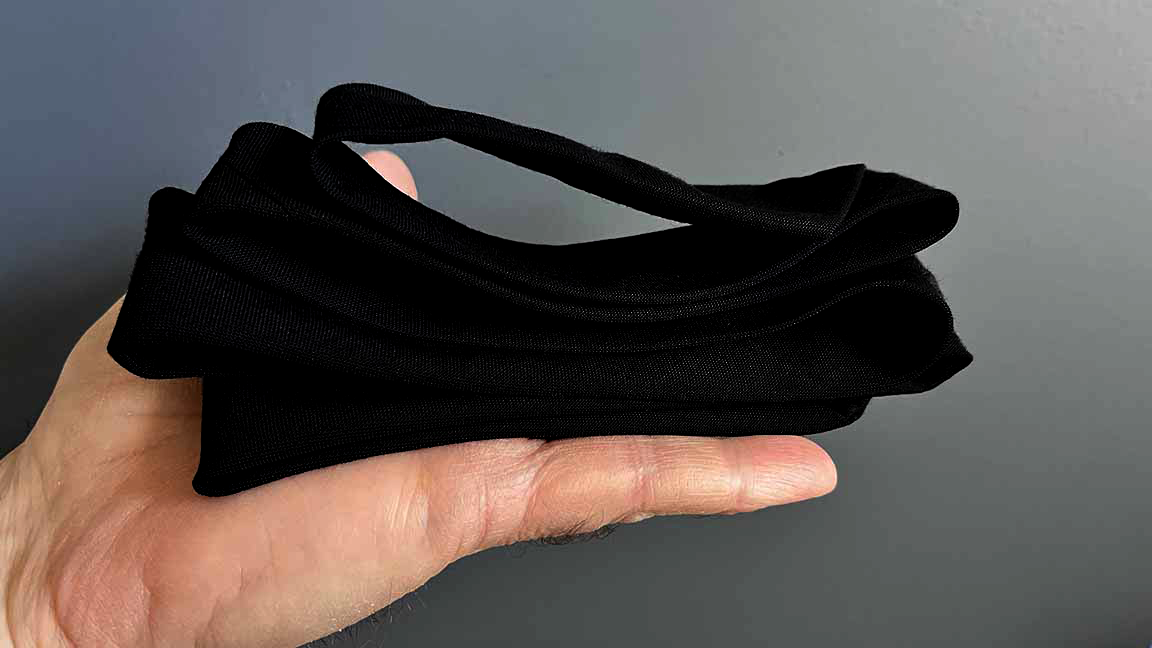
"Now suppose this is an expanse of time," Warren Hartstock said. He took an end in each hand and stretched the necktie out horizontally. "Today," he said, lifting his left hand a little. "The future," he said, lifting his right. "One here, the other there. Out of reach."
He swung his right hand up so the necktie was vertical. "Normally, all this—well—fabric of time," he said, "gets longer, day after day. The ancients held that the Fates spun it out, or wove it, additively. One event followed another, and another followed that, each day further away than the last."
He lowered his right hand a little, so the necktie went a little slack. "The resonator," he said, "holds the days in a fixed relation." He lowered his hand some more, and the necktie folded over on itself at the bottom, in the palm of his left hand. "We begin to generate surplus time—extra material to work with," he said.
He lowered his top hand some more, and the accumulating slack in the necktie folded back the other way, then reversed again. He kept lowering his hand until the necktie was folded back and forth on itself in a loose accordion-style stack, upright between his hands. "You see?"
"So thanks to the resonator you have a crumpled-up necktie?" Maxine said. "And we're stuck in the crumpled part?"
"Now," Warren Hartstock said, "imagine that instead of being held between my hands, the fabric is inside an immensely powerful hydraulic press. Every part of the length of the necktie is compressed together into every other part, so it can all be accessed at once. We can reach into whatever moment in time we desire, to adjust and re-adjust the future as needed. To identify the optimal arrangement, and achieve the ideal outcome."
"What if the future doesn't want to be squeezed or adjusted?" I said. "What if I just want my dad to get to us?"
"You don't need to do this," Maxine said. "We won the war, you know."
"Did we?" Warren Hartstock said, with interest. "How did we do it?"
Maxine and I shared a glance. It did not seem like a good idea to mention the Manhattan Project to Warren Hartstock. "A lot of different ways," I said.
"What if we can win it better?" he said. "What if we can win the war in the best possible way?"
"Dr. Argemend and Norman Melk think you shouldn't," Maxine said.
"I am aware of what my colleagues, or former colleagues, think," Warren Hartstock said. "They are concerned about the unknowns. Yet what are the unknowns? They are simply the things we do not yet know—things we have not had time to figure out."
He gave the folded-up necktie a bouncy little squeeze. "Time!" he said. "With the resonator, we can examine the unknowns from every angle, until we know what they are. We can cast aside what we don't need, and keep what is most valuable."
His voice was still low but it had an excitement to it that didn't sound good at all. "You can't just cast aside the future!" I said. "We live in it!"
"In the current arrangement you do," Warren Hartstock said. "In another arrangement—" He relaxed his hands and let the necktie uncrumple, then turned to hang it back up on its peg.
"You seem like nice children," he said. "If a little intrusive. Milton said you had your good points."
"Milton!" Maxine said.
"But from our point of view," Warren Hartstock said, "you don't exist yet. Your specific existence is not necessary. Perhaps in a better future there would be other children, children who are even nicer. Maybe I would get my box of acorns back."
I felt dizzy. Maxine looked like she felt dizzy too.
"We will find out soon enough," Warren Hartstock said. He took a black overcoat off one of the pegs and put it on. "While we are finding out," he added, speaking quickly now, "I think it is best if you wait here. I will see you later. Or possibly I won't. Goodbye."
He slipped out the door and closed it behind him. The latch clicked shut, and we heard the clunk of a key turning the bolt.
Find previous chapters of The Stairs here.

WEATHER REVIEWS

New York City, May 13, 2026
★★★ Once again the sun outdid what it was forecast to do, taking the morning and midday away from the expected pall of clouds. Only after a very late lunch did the clouds seal the sky over, as the sun out the window gave way to a surging of wind in the branches that sounded like the crash of surf. But then the light was back to shine on the leaves even as they kept churning. The wind rattled religious fliers under windshield wipers and shoved people's hair against the way it had been combed or styled, flattening it into radial patterns like a dandelion clock about to give way.
New York City, May 14, 2026
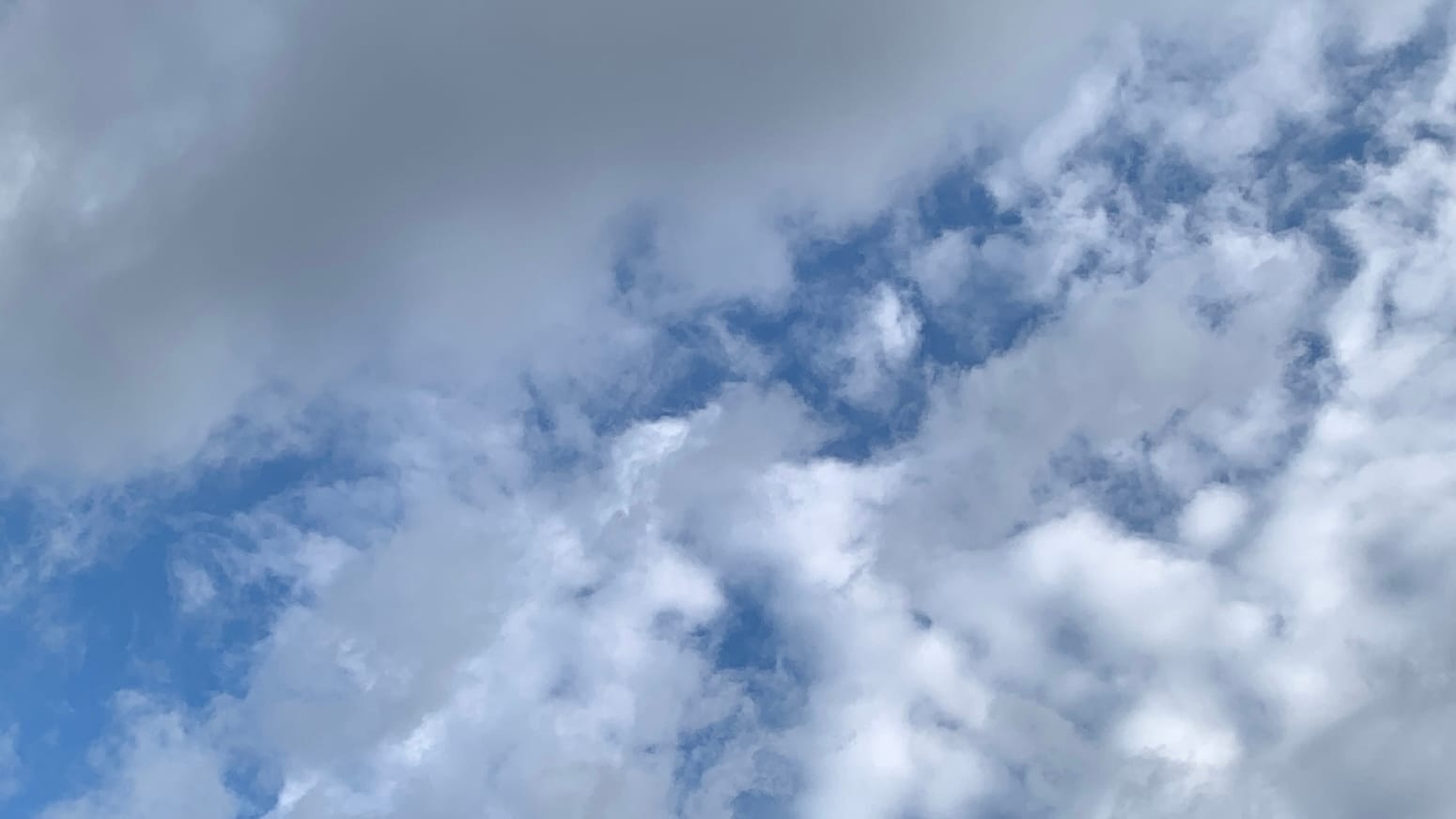
★★ Overnight rain had left nothing but an expanse of damp pavement, its edge undulating to trace the negative space outside the shelter of the trees. The humidity made it stuffy inside despite the temperature numbers on the phone and the occasional short drafts of chilly air from the windows. Outdoors the chill was more apparent but still offset by the damp. Ceiling light fixtures shone through the faces of glass office towers under thick, uneven midday cloud cover. Big gulls circled sluggishly, high up. Through the hours the joints between the clouds broke open and instead of the predicted afternoon shower there was a passing but substantial wash of sun. Near day's end the sun found an angle to put a startling gilding on the buildings through the darkening trees out back, and on the water tower up the avenue.

EASY LISTENING DEP'T.
Here is the Indignity Morning Podcast archive!
 TOM SCOCCA

SANDWICH RECIPES DEP'T.
WE PRESENT INSTRUCTIONS for the assembly of a sandwich selected from Conservation Recipes, compiled by The Mobilized Women's Organizations of Berkeley, California, published in 1918 and available at archive.org for the delectation of all.
FIG SANDWICHES
Figs.
Nuts.
Orange juice.
Brown bread.
Chop figs fine, add water to make a thin paste and boil gently until thick enough to spread. Add nut meats, chopped fine, a little orange juice, and spread on slices of brown bread.
Mrs. J. C. Bacon.
PICNIC SANDWICHES
1 can pimientos.
1 tblsp. butter.
Cheese.
Buttered bread.
Fry pimientos quickly in butter and remove from pan. In the same pan place thin slices of cheese and hold this over the camp fire until the cheese is "pliable," but not melted. Place between slices of bread a layer of pimiento and a layer of cheese. Serve while hot.
APPLE SANDWICHES
1 large apple.
1/3 cup raisins.
Graham bread.
Lemon juice.
Chop the apple and raisins together until fine and spread on thin slices of buttered graham bread. Sprinkle with lemon juice and put two slices together.
If you are inspired to prepare a sandwich inspired by our continued offerings, be sure to send along a description of your experience and a photo or three to us here: indignity@indignity.net.

SELF-SERVING SELF-PROMOTION DEP'T.