The Stairs, Chapter 38
Indignity Vol. 6, No. 64

THE STAIRS
© Tom Scocca, 2025
This is a work of fiction. Any resemblance to actual people, places, and events is entirely coincidental, with the exception of the events in Chapters One and Two, which happened more or less as written, on the line between Cambridge and Somerville, Massachusetts, on Memorial Day weekend in 1999.
38.
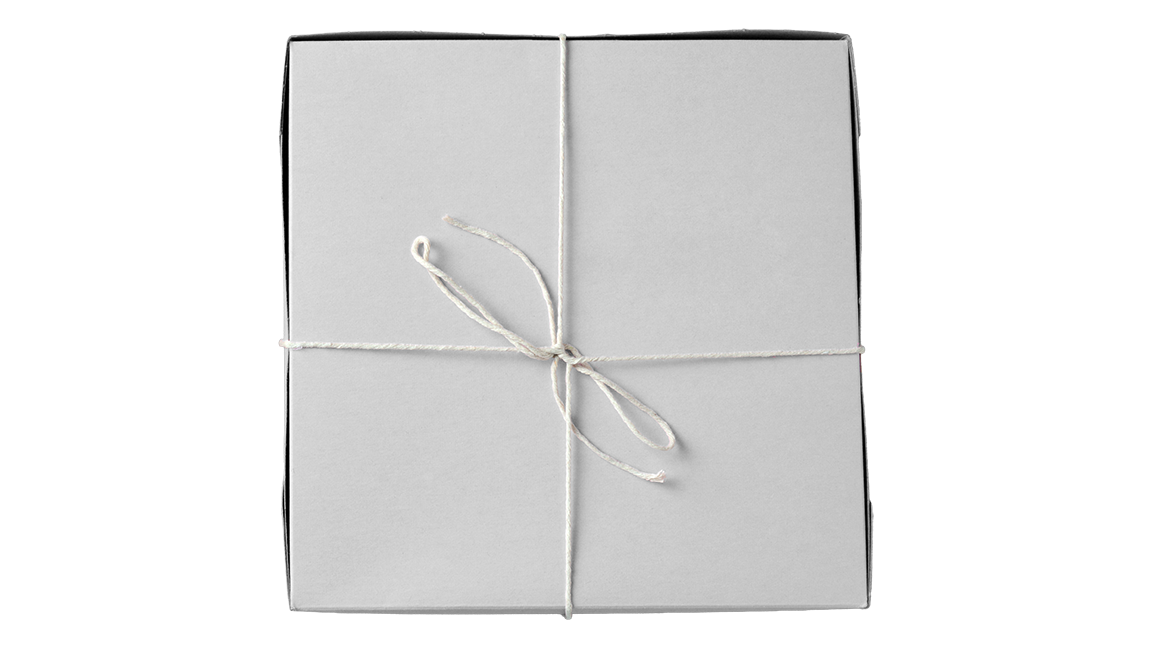
Out on the landing behind us was a tall, stooped figure in a blue windbreaker. In his hand was a wide box made of stiff paper, tied up with string. His long, wrinkled face was grinning with delight.
Norman Melk—Professor Norman Melk, the old Norman Melk from the philosophy department lounge—raised his finger for silence before we could exclaim. "Shh," he said. "I believe your mother is still asleep."
"How did you—?" I asked.
"I did tell you I was working on a solution," he said. "I realized, however, that I couldn't do the necessary part of it in 1940."
"Or—strictly speaking—ever, without some help," said a voice beside us.
We whipped our heads around. In the dimness, we could just make out Pythia sitting on our windowsill by the box fan, looking satisfied.
"I don't understand," I said.
Norman Melk held up the box. "First," he said, "you must be famished after your long and busy night, or your long and busy afternoon and evening."
He untied the string and lifted the lid. Inside were four slices of apple pie, with four metal forks. "I had to pay Eugene extra for the cutlery," he said. "Probably I shouldn't have risked it at all, but the thought of being so close to Walt's Eats again was irresistible."
We set the box on the floor and sat down around it. Norman Melk folded himself up with surprising agility, considering. We dug in. The crust crunched and dissolved into savory sweetness; the apples seemed tender as pudding yet were firm enough to keep their shape. The mellowed sharpness of the spices carried the apple flavor up into my nose as I chewed.
For a few minutes, we ate in silence. Theo gave a little burp, and covered it with a long sigh.
"The problem, of course," Norman Melk said, "was how to get your door open again, onto the stairwell, in the present day."
"How did you get here at all?" Maxine asked.
"A little subterfuge," he said. "Yesterday, I stopped in at the record shop where Walt's used to be. I asked them if they had a very specific jazz recording—a recording that almost exists, but not quite. An LP of a live show at one particular club for one particular label in one particular year, by a combo who did make records at that club, for that label, and in that year, but never all at once. I was adamant that this exact recording must be findable, on the authority that I personally remembered having once, long ago, bought it new. While they fruitlessly searched their bins, then their record guides, and finally their computers, I pilfered the spare store key from behind the counter."
"Neat work," Pythia said.
"The key got me into the store again at night, out its back door, and up the stairwell to your landing," Norman Melk said. "From there, I needed Pythia."
"Milton went back to fink us out to Warren Hartstock without ever leaving the apartment, remember?" Pythia said. "So there had to be a way back and forth from inside. I just got him to tell me where it was—dusty space between the joists, I don't recommend it—and I came through it."
"She popped the lock button, I turned the outer knob, and here we were," he said. "I shut myself in, opened the door to the stairs again, and I could smell the winter air outside. Alvin brought you here while I was fetching the pie."
"What if something went wrong?" I asked.
Norman Melk nodded. "I thought about that a great deal," he said. "For decades, in fact. I knew the answer had to lie in the future, which was why I couldn't come with you after we destroyed the resonator—too much chance of running into my future self, whatever my future self would be doing. When I didn't hear anything more from you, I reasoned that you must not have been stuck in 1940. Therefore, as long as I could come up with a reasonable plan before now, it seemed likely that the plan would have to work in the end. Unless I did something to interfere with myself."
"But you could have gotten yourself stuck, going for the pie," Maxine said.
"That's true," Norman Melk said. "I suppose I trusted that any sensible and well-read child would know not to shut the door behind them."
He rolled up the forks in the empty box and began untying his shoes. "If you'll excuse me," he said, "I'll just need to tiptoe out the front door of your apartment, return the key to the poor record experts downstairs, and make my way home."
"Wait," Theo said, wiping crumbs from his mouth with a tissue. "Where did the box of acorns come from in the first place?"
"Oh," Norman Melk said. "Warren left a standing order with the War Department. The Defense Department, now. One box of acorns, collected from the City Forest's reserve crop—they've always had good luck with Quercus serrata, to this day—delivered to the stairwell on the last Tuesday of each month. He had no real idea where in the future the resonator would connect to, so he had them start in 1950 and just keep going. If the previous box was still there, they'd just take it away and leave a new one."
"They sent a soldier with a box of acorns every month?" I said. "Year after year? The Army kept doing that, just because someone told them they needed to once?"
"My dear children," Norman Melk said, "our armed forces and their installations stand ready even now to fight a two-front war, on land and sea, against the Soviet Union and Imperial Japan. One box of acorns, in the big picture, is a very minor irregularity."
"We'll take it, though," Pythia said, eyeing the cardboard box where we'd left it by the closet.
"How will you carry it?" Theo said.
"Just leave it where we can get at it," Pythia said. "By the window. Not the stairs." She waved a paw and slipped out beside the fan.
"I don't think the stairs will be a point of entanglement much longer," Norman Melk said. He crossed the bedroom, carrying his shoes in one hand and the rolled-up box in the other. We walked out with him, moving as softly as possible, down the darkened hallway and to the front door.
I turned the latch gently and eased it open. The lights were on in the front stairwell. "Thank you," Norman Melk said, almost silently. "Good night."
"See you later," we said, and I slowly pulled the front door shut again.
Find previous chapters of The Stairs here.

WEATHER REVIEWS

New York City, July 28, 2026
★★ The streets were slightly damp; the sky was mildly gray. Nothing about the morning suggested the spectacular warnings in the forecast for the day to come. The afternoon clouds, just past 1 o'clock, had thin enough patches for a line of shadow to fade in and out the balcony wall. By 3 the sun was down to a white spot going in and out of view and the breeze was strong enough that the air, saturated though it was, felt cool. Chipmunks were out and busy. Black cherries lay mostly crushed on the paths in the Park. A scrap of trash went spinning and leaves started turning over. The rain arrived with a thin high crackling sound, then passed on and away without much incident, leaving colder air blowing in through the windows. When the next round of the rain came, it was splashing and gusty in the dark. Later still, at some sweaty and sleepless hour, it took on the sound of a spray nozzle.

New York City, July 29, 2026
★★★ When the alarm went off, the forecast said the rain was over, but when it was time to choose waterproof or non-waterproof shoes to wear out the door, a new round of showers had been added. The tip of the ultratall below Central Park West was lost among ripples of clouds. The air in the subway was stagnant with the accumulated scents of morning commuters' grooming products. Fine drops fell against the dull Midtown view of a dull Midtown building. A spell of sun followed, with blue on the visible piece of sky, and then the forecast added yet another scheduled shower. But the sun kept coming back, honey-tinged, and the damp weight lifted from the air. The atmosphere in the subway remained unimproved. Above ground again, the breeze filled and rolled an abandoned polka-dotted umbrella sleeve.

New York City, July 30, 2026
★★ Sun arrived and shone on the fronts of the townhouses but the sky above and behind them was gray. Minutes later, the whole view went dark. Light rain fell and kept falling, and new chances of new showers kept appearing in the weather app. Around 3 o'clock, when the forecast had featured sun icons, the rain took on a distinctly seething quality—but soon past the hour, with the gutters still gurgling and heavy drips resounding, the sky abruptly went blue and the sun shone as strongly as if it had been there all along. The gray returned equally swiftly, then left again. Cooking smells floated over Midtown, in what seemed to have finally stabilized into a comfortable late day.
SANDWICH RECIPES DEP'T.
WE PRESENT INSTRUCTIONS for the assembly of sandwiches selected from Daily Bread: Tested Recipes of the Ladies of Fergus County, Montana, by The "Home Workers" Society of the First Presbyterian Church Lewistown, Montana, published in 1907 and now available at archive.org for the delectation of all.
HAM SANDWICHES.
Put cold ham through the meat-chopper, mix 1 cup of meat with salad dressing enough to moisten, add 1 teaspoon of grated horseradish and thin slices of cucumber pickles. — Mrs. C. H. Williams.
DATE SANDWICHES.
Delicious sandwiches are made of dates chopped fine and moistened with thick cream, spread between slices of rye or graham bread, which may be buttered or not as one fancies. — Mrs. G. J. Wiedeman.
DREAM SANDWICHES.
Chop fine one-half cup pecan nuts, one-half cup stoned raisins, 1 apple; add juice of half a lemon and 1 spoonful sugar. Mix thoroughly and spread thinly between thin slices of buttered bread from which the crust has been removed. — Mrs. W. A. Hedges.
PIMENTO SANDWICHES.
Chop pimentoes and mix with enough boiled salad dressing to make spread nicely. If liked, a small quantity of chopped nuts may be added. Butter thin slices of bread and spread with the mixture. — Mrs. Sidney L. Little.
If you are inspired to prepare a sandwich inspired by our continued offerings, be sure to send along a description of your experience and a photo or three to us here: indignity@indignity.net.

EASY LISTENING DEP'T.
Here is the Indignity Morning Podcast archive!
 TOM SCOCCA

S_BST_CK BAD DEP'T.